

Ireland Castle Wedding Guide: Ruins, Costs, & How to Plan

If you’re researching castle weddings in Ireland, you’re probably picturing something cinematic: centuries-old stone walls, mist rolling in from the coast, and the kind of atmosphere you can’t fake.
I’ve good news for you, my darlings: that vibe is entirely possible.
This guide walks you through how castle weddings in Ireland actually work, from types of venues to what’s legal, what’s free, and what to expect when planning. As an elopement photographer based in Ireland, I’ve spent years finding these hidden locations and guiding couples through this exact process.
Table of Contents:
- Who this guide is for
- Types of castle wedding venues in Ireland
- Legal vs. symbolic ceremonies
- What actually happens at an Irish castle wedding
- Planning your castle wedding in Ireland
- Real castle weddings
- Frequently asked questions
- Find your perfect Irish castle
Who This Guide Is For
This is for you if you’re:
- Planning an intimate wedding with 0–30 guests. (I usually photograph a max of 8-12, but up to 30 for 2-day elopement adventures.)
- Drawn to atmosphere and authenticity over polished amenities
- Feeling overwhelmed by conflicting or sparse information online
- Looking for someone who knows these locations intimately and can handle the details
If you want a large formal wedding with 100+ guests, large castle hotels are a better fit, but that’s not what this guide focuses on.
Types of Castle Wedding Venues in Ireland
Not every Irish castle is open to weddings, and the ones that are fall into three general categories. Understanding the differences helps you choose what fits your style, comfort level, and guest list.
1. Castle Ruins (Public or Private Access)
These are Ireland’s dramatic, weathered structures: roofless, wind-swept, and full of atmosphere.
Many are public heritage sites you can access freely. Others sit on private land, where you’ll arrange permission or pay a small rental fee for exclusive use.
Either way, ceremonies almost always happen outside the ruins, with the castle as your backdrop. Some are completely free to use, others require simple coordination with the landowner or Office of Public Works (OPW).
Finding those hidden gems—and knowing who to contact for access—is exactly what I do for my couples as your photographer. I create a custom location guide at the beginning of the planning process, matching you with sites that fit your vibe: coastal cliffs or inland green hills, wild or refined, accessible or remote. Then I handle the photography permissions and coordinate access so you don’t have to.
2. Restored Castle Estates
Restored estates are still castles, just with roofs, manicured grounds, and reliable backup options. They’re often managed by the OPW or run as Irish castle wedding venues and tend to feel more refined than rugged.
They’re ideal if you want castle architecture with modern comfort: gardens, walled courtyards, or small indoor spaces for backup ceremonies.
You’ll trade some wildness for stability, but for couples who want structure over spontaneity, these are great middle-ground choices.
3. Castle Hotels
Castle hotels are fully commercial venues that host larger weddings. They’re beautiful but typically have guest minimums and standard packages.
If your dream is an intimate castle elopement or a smaller celebration, castle hotels often feel too formal or large. This guide focuses more on flexible, smaller-scale locations.
Legal vs Symbolic: What Most Couples Choose
Here’s something most couples don’t realize until they’re deep in research: getting legally married in Ireland involves some…hoops if you’re coming from abroad.
Most international couples (especially Americans) choose to complete the legal paperwork at home and have a symbolic ceremony in Ireland. It’s simpler, faster, and lets you focus on the experience rather than documents and timelines.
You’ll still exchange vows, rings, and have a celebrant (if you want one)—it’s a real wedding in every way that matters. The only difference is you’ve already signed the paperwork back home.
If you do want a legal ceremony here, you’ll need to follow some rules, which require at least 3 months’ notice, an in-person appearance at a registry office at least 5 days before your ceremony, and (here’s the kicker) huge restrictions on locations.
For most couples planning a castle wedding in Ireland, the symbolic route makes the process infinitely more enjoyable (and you get to elope wherever you want).
What Actually Happens at an Irish Castle Wedding
Castle weddings in Ireland are equal parts romance and realism. Here’s what that balance looks like:
Ceremony Locations
- Ceremonies usually take place outdoors on the castle grounds or adjacent land
- Interiors of ruins are rarely safe or accessible
- Outdoor setups give the best light and views but mean embracing the elements
- Some estates offer indoor rooms or nearby shelters; most ruins don’t
Guest Capacity
- Most castle sites suit 0–30 guests
- Uneven ground and limited facilities make large gatherings impractical
- Smaller groups mean more privacy, flexibility, and less stress
- Eloping without any guests can give you a much more “removed from it all” feeling, and a stronger sense of presence
Costs, Permissions & Access
- Public ruins: Often free to use, but please respect posted rules and visitor hours
- Privately owned sites: May require a rental fee (typically €200–€500)
- Restored estates: Expect venue-style pricing
- Photography permissions: These vary by site. I handle those details for my clients, so you won’t have to worry about it. (But I mention it because I do handle it; everything is above board and legal.)
Weather Reality
It might rain, and that’s okay! Some sites have nearby shelters or small structures, others don’t. Bring rain jackets, maybe an umbrella, and embrace the mood. Overcast skies actually make for incredible photos…I love being out in Weather. Even if the castle doesn’t have a roof, being able to shelter behind a wall is often a huge help.
Planning Your Castle Wedding in Ireland
Choosing the Right Location
Location determines accessibility, scenery, and how “wild” the day feels. Consider:
- Vibe: Cliffs and sea views, green hills, or historic villages
- Accessibility: How far it is from airports or towns
- Exposure: Coastal sites = stronger winds, inland = calmer conditions
- Backup plan: If it rains, is there shelter nearby?
If you’re unsure where to start, that’s completely normal. Most couples aren’t familiar with what’s possible until I show them. You haven’t done this before, it’s not your job to know everything! As part of every photography package, I curate a personalized location guide that fits your aesthetic, comfort with remoteness, and season, so you don’t have to desperately Google places you’ve never been to.
Best Time of Year for an Ireland Castle Wedding
Ireland’s weather is unpredictable but always photogenic, just in different ways.
| Season | Pros | Considerations | Best For |
|---|---|---|---|
| Spring (April-May) | Fresh greens, fewer crowds, wildflowers | Cooler temps, variable rain | Adventurous, nature-loving, “flower child” folks |
| Summer (June-Aug) | Long daylight hours, lush countryside | Peak tourism, higher prices | Groups, longer celebration days |
| Autumn (Sept-Oct) | Warm tones, changing colours, fewer crowds | Shorter days, variable rain | Amazing photos, true photographer’s dream |
| Winter (Nov-Feb) | Moody light/weather, solitude | Cold, limited daylight, wet | Folks who don’t like crowds but love a moody aesthetic |
Other Historic Settings to Consider
If you love the architecture but want something quieter or more spiritual, abbey ruins are another incredible option.
Abbeys tend to be easier to access, sometimes free to use, and carry the same timeless aesthetic as castles, just with a different kind of history.
And as something of a wild card, check out standing stones! (real wedding linked below)
Real Ireland Castle & Abbey Weddings
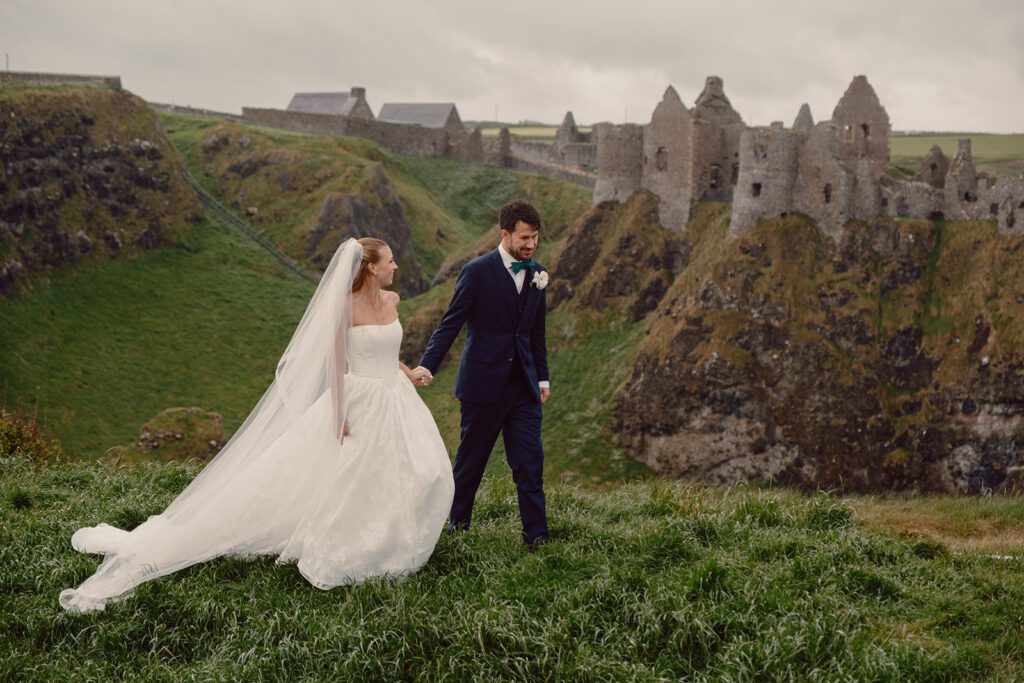
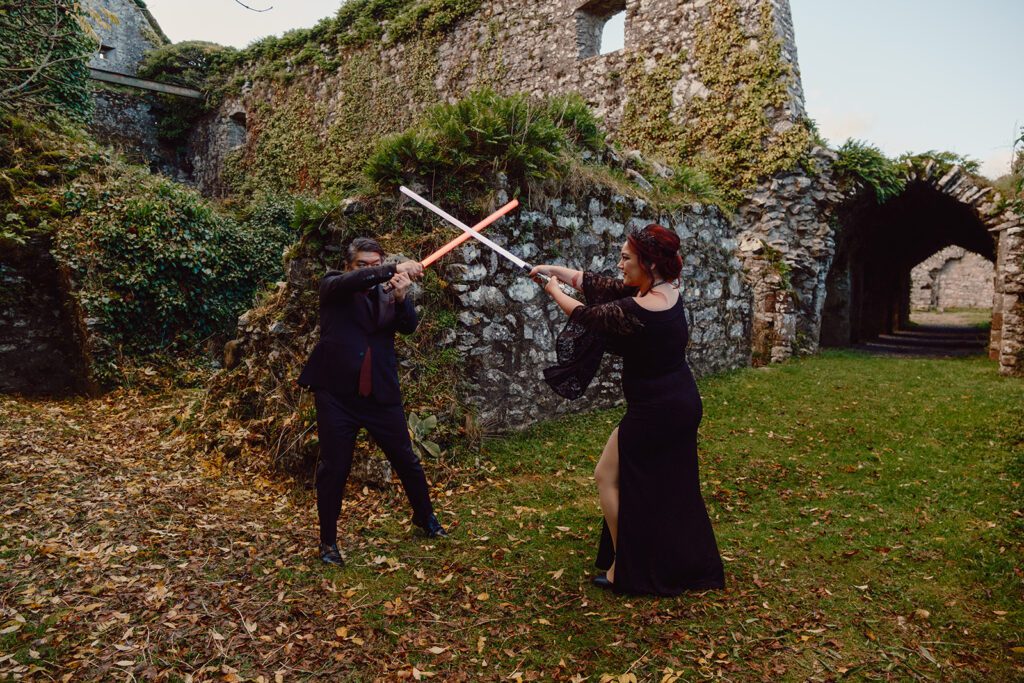
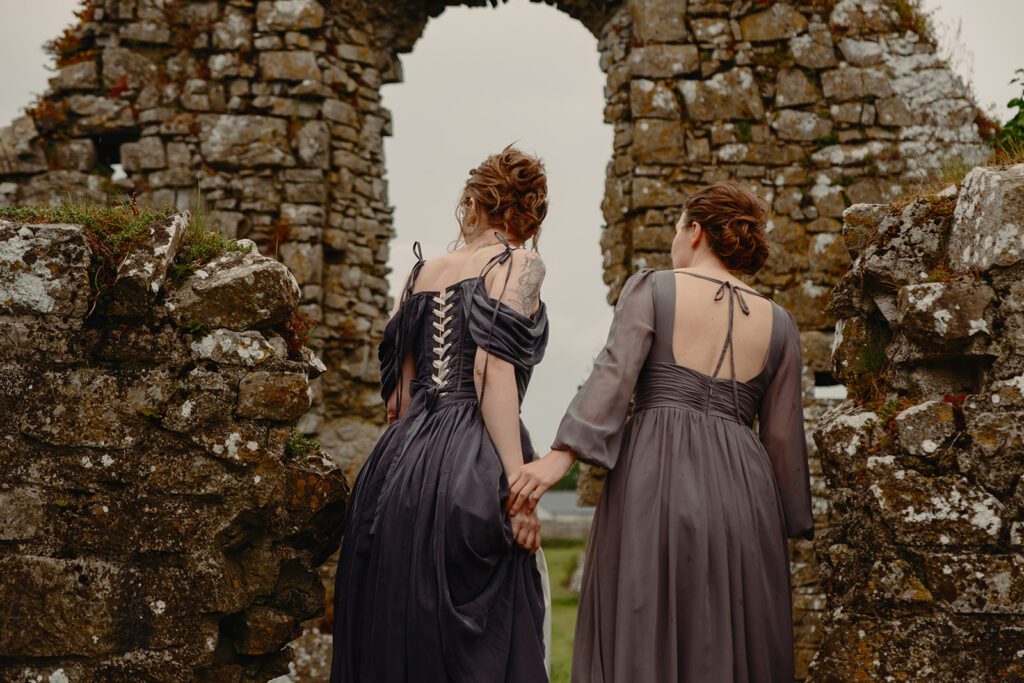
This is what your Ireland castle (or abbey) wedding can look like!


FAQ: Ireland Castle Wedding Questions
Can you get married in a castle in Ireland?
Yes, you can get married at a castle in Ireland. However, most castle ruins are unsafe for indoor gatherings, so ceremonies typically happen outside on the grounds or nearby land, with the castle as your backdrop. Restored castle estates may offer indoor spaces.
How much does a castle wedding in Ireland cost?
It depends on the site. Many public castle ruins are free to use. Private landowners may charge €200–€500 for exclusive access. Restored castle estates are priced like traditional wedding venues, so they’ll cost you a bit more, depending on guest count and services.
Are castle weddings in Ireland expensive?
Not necessarily. Getting married at a castle in Ireland can be surprisingly affordable—many historic ruins are free or low-cost to access. Your main expenses will be travel, accommodation, your photographer, and any celebrant or vendors you hire. It’s often less expensive than a traditional venue wedding.
Do you need permission to use a castle ruin for your ceremony?
Yes—at least informally. Public heritage sites often allow small symbolic ceremonies if you’re respectful and non-intrusive. Private land requires the owner’s consent. I handle this coordination for my clients as part of the planning process.
Can Americans legally marry in Ireland?
Yes, but it requires at least 3 months’ notice, paperwork, and a meeting at the registry office at least 5 days before your wedding day. Most American couples handle legalities at home with a simple courthouse ceremony, then exchange vows in Ireland as a symbolic ceremony. It keeps the experience simple and stress-free, and it means you don’t have to deal with location restrictions; highly recommend.
What is the best castle for a small wedding in Ireland?
It depends on your style and priorities! Coastal castles offer dramatic cliff views but stronger winds. Inland castles tend to be more sheltered with rolling green hills. Some couples want total privacy and remoteness; others prefer easier access. As your photographer, I’ll match you with some options that fit your specific vision.
Do Irish castles provide wedding coordinators?
Restored castle estates often have coordinators or event managers. Castle ruins and private historic sites don’t; that’s where a photographer who specializes in Ireland elopements becomes invaluable (like me!). I guide you through location selection, permissions, wedding itinerary, and logistics. All of it.
How far in advance should you book a castle wedding in Ireland?
For the best flexibility and choice, plan 6–12 months ahead. For places that don’t require reservation, we can pull it off in about 2-3 months if need be. (…give yourselves time if you can though, it’ll be more enjoyable)
What happens if it rains on your wedding day?
It might! And that’s part of the Irish experience. Some sites have nearby shelters or small structures; others don’t. Overcast and misty conditions create incredibly moody, romantic photos. I’m always prepared to photograph in any weather, and I kind of love it. That said: if it’s truly dire and we absolutely can’t be outside, I do keep some wiggle room in my schedule.
How many guests can attend a castle wedding in Ireland?
Most castle ruins and private historic sites work best for 2–30 guests. Uneven terrain, limited facilities, and access restrictions make larger groups challenging. Restored castle estates can typically accommodate more guests, but this guide focuses on intimate celebrations. If you want a big wedding, more power to you, but I’m not the one.
Let’s Find Your Perfect Irish Castle!
Castle and ruin weddings in Ireland are less about logistics and more about atmosphere. They’re for couples who want space, freedom, and a sense of history, without the formality of a venue schedule or guest minimums.
If you’re dreaming of saying your vows among ancient stone and Irish wind, I can help make it happen. As your elopement photographer, I handle everything from finding your perfect site to securing access and photography permissions, so you can just show up and experience it.
Explore my Ireland Elopement Guide for more details on planning your adventure, check out my guide to the best small wedding venues in Ireland, or get in touch here to start designing your day!


Previous Post
Next Post

+ Show / Hide Comments
Share to: